
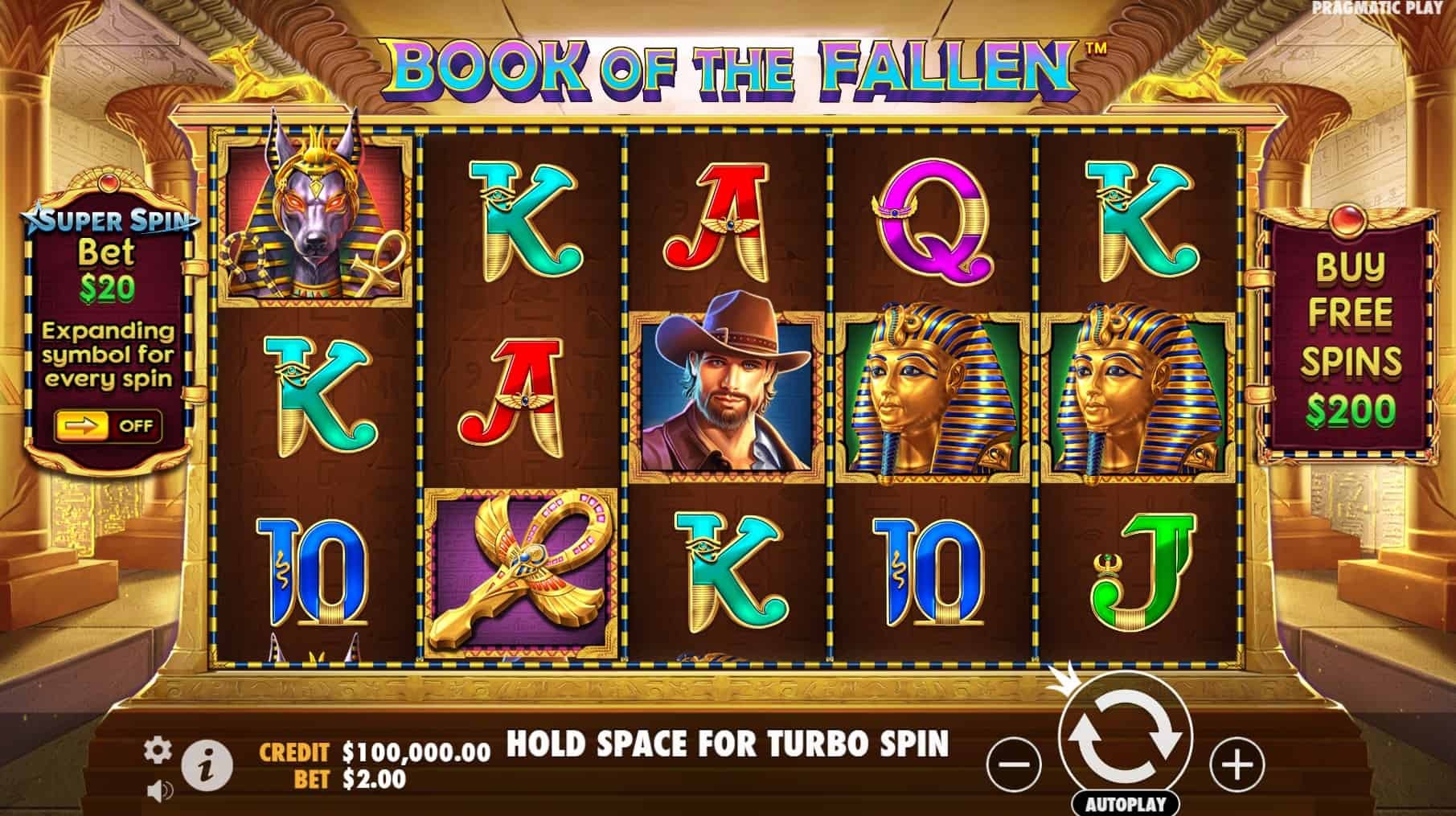





Book Of The Fallen Slot Demo In Austria
Play in test mode with virtual credit, check pace and features, and start in Austria only from 18+.
Why The Demo Mode Is So Helpful In 2026
Imagine you open a slot in the evening just 'for a few rounds' and only later realize you don't even know what stake was active. This is exactly where the demo mode helps: It removes the financial pressure and lets you observe how the game really works. In 2026, this is more important than ever because many games use fast effects that subtly accelerate decisions.
Use the time to clarify three things: Is the interface easy to read? Can you quickly find rules and information? And does your pace remain calm, even when things get exciting for a moment? If you can achieve this in the test, you have a real foundation - not just a gut feeling.
How To Set Up A Clean Test Session
Suppose you have 20 minutes and really want to stop afterwards. Then plan the session like a mini-experiment: a fixed number of rounds or a timer, no parallel distractions, and only a single adjustment (for example, raising or lowering the stake slightly once). Many players change five settings in two minutes - and wonder why everything seems “strange”.
It's better to start consistently: first open the info menu, check the symbol reels, then play slowly. After the first block, stand up briefly, drink water, and re-evaluate. This break may seem trivial, but it's the point where you notice whether you're still playing consciously or just staying in the flow.
Understanding Bonus Features Without Pressure
Imagine a special feature starts and you immediately feel the urge to “I have to keep going now”. This is exactly where many lose track. In 2026, bonus mechanics should not be something that chases you, but something you consciously test. The key is a clear approach: first understand, then evaluate, then stop.
After a feature sequence, observe your reaction. Do you become calmer because everything is clear - or more agitated because you want “one more time”? This is not a moral question, but a practical hint as to how strict your limits will need to be later.
Book Of The Fallen Demo Play
Imagine you want to specifically see how a bonus phase feels without waiting forever for the trigger. Then it makes sense to read the rules beforehand and check if there are functions that make bonus sequences more quickly accessible. If such a thing is offered, use it only as a learning tool: small stakes, short blocks, then a break.
The order is important: first understand the process, then a single “test with feeling” round, then stop. If you continue playing immediately because it was exciting, you are confusing testing with getting carried away. This is exactly what you want to avoid in demo mode.
How To Check Rules, Symbols, And Triggers
Suppose you see a sequence that “looks like something” but you don't know exactly what happened. Then stop after the round and open the info page instead of clicking further. Many players concoct rules in their heads that don't exist - and play longer to “confirm” this idea.
Be specific: Which symbols are special? What triggers a special phase? Are there collecting elements or multipliers that only count at certain moments? If you read this carefully once and then play a short series, the effects will become comprehensible - and lose their pressure.
H4 Mini-Checklist Before The First Spin
Imagine you just want to check today if the pace and operation suit you. Check the stake display, rules/info, autoplay settings, and stop option. Mute notifications, close unnecessary tabs, and set a clear end time.
Then play a short block at normal pace, without frantic clicks. If you still know exactly what you had set at the end, the test was successful.
H4 Stop Signals When It Gets Too Fast
Suppose you notice that you are clicking faster than you can read. Or you get irritated because “too little is happening”. These are classic stop signals. End the session immediately instead of “playing through”.
If this impulse comes more often, timeouts or longer breaks help. The trick is not to be stronger, but to remove the decision from the moment when you are least calm.
Account, Deposit, and Limits In Austria
Imagine you want to start with real money after the test, but without stress regarding verification, security, or settings. Then the correct order is simple: set up an account, activate security options, set limits, and only then deposit. Many reverse this because they want to play quickly - and that's when chaos ensues.
In Austria, the framework should be clear: only 18+, and only in an environment where break and limit functions are genuinely usable. This is standard in 2026 if you want a relaxed experience.
Registration, 18+ And Device Security
Suppose you are playing on a tablet that others in the household also use. Then saved logins are a risk - not just for money, but also for the age limit. Use a strong password, activate additional login if available, and log out after each session.
Complete identity or age checks early, not at night in a half-sleep. This way you avoid errors, queries, and the typical frustration when you “just wanted to quickly do something”.
Budget, Deposit Framework, And Breaks
Imagine you've had an exciting phase and feel the urge to “just quickly” top up. That's exactly what deposit and loss limits are for. Set a session budget that doesn't affect your daily expenses, and treat it as a fixed entertainment price - regardless of the outcome.
Also, plan a break before you even start. Not as a last resort, but as a fixed step in the middle. This short interruption prevents a smooth flow from pulling you into a longer session.
Area | What You Set | What It's For |
Session Budget | Maximum amount per session | Stops spontaneous top-ups |
Timeframe | End time or timer | Breaks the “just one more minute” loop |
Deposit Limit | Daily or weekly limit | Reduces impulse payments |
Loss Limit | Clear stop value | Prevents chasing losses |
Break/Timeout | Fixed interruption | Brings focus back before it tips over |
Withdrawals And Support Without Haste
Suppose you want to withdraw at the end, but are tired and clicking too fast. First, end the session, check account details, and follow the steps calmly. Do not change the method without good reason, as this often triggers additional checks.
If something is stuck or unclear, write briefly and factually to support: device, time, exactly what happened, what you have already tried. The more precise you are, the faster it will be resolved - and the less you will resort to frantic clicking.
Mobile Gameplay And Technology In Everyday Life
Imagine playing on the go, the network fluctuates, and you press twice because you think it's not responding. This is exactly how stress arises, which makes decisions worse. In 2026, technology is no longer a side issue, but part of responsible gaming: stable access, a calm environment, short sessions.
Therefore, consciously test whether you tend to become impulsive on your smartphone or sit too long at your desktop. There is no “better” - only the question of where you can stop more easily.
Browser, App And User Comfort
Suppose you want to start quickly and stop just as cleanly. In the browser, ending is often very direct, while in apps, performance sometimes feels more stable. The form is not important, but rather that you can immediately find limits and log out.
Do a mini-test: play briefly, exit properly, log in again later. If that works smoothly, the foundation is good. If you're already annoyed when exiting, that's a sign to change the environment.
Stability, Data Volume And Battery
Imagine the battery is low and you notice your patience waning. Then clicks become faster, and errors occur more often. It's better to play when the battery and connection are stable, and keep mobile sessions short.
If you need to watch your data volume, avoid additional background streaming and close other apps. Less tech stress means more control - and ultimately that's more important than any gaming routine.
Autoplay, Pace And Attention
Suppose you activate autoplay, look away briefly, and suddenly you're much further than planned. Only use automatic play with a clear number of rounds and with a stop criterion that you take seriously. If you notice that you are no longer actively thinking along, autoplay is not your friend.
Consciously keep the pace lower than the interface offers. In 2026, speed is readily available - focus is the scarce resource.
Troubleshooting Step By Step
Imagine the game freezes and you immediately get irritated. Don't click blindly. Refresh, close unnecessary tabs, restart the device, and if necessary, try a different browser variant.
Note the time and what happened immediately before. This helps support and prevents technical frustration from turning into “I'll just keep playing anyway.”

Responsible Gaming As Standard
Imagine you start relaxed, but after a while, fun turns into an inner pressure to achieve “something more”. Then you don't need a guilty conscience, but a system: budget, time frame, breaks, and clear stop signals. In Austria, 18+ is a fixed limit, and it's worth technically securing this limit.
If you notice that control is difficult, timeouts or longer breaks are not embarrassing, but practical. The sooner you react, the easier it is for gaming to remain a voluntary decision.
Conclusion For Austria: Test Briefly, Stop Clearly
Imagine you want to be able to say after the session: “I understood how it works, and I stopped as planned.” That's exactly a good test. Play in short blocks, change only one thing per block, read rules when something happens, and use breaks as a fixed step.
If the impulse comes to speed up or increase stakes, end the session. In Austria, you only play 18+ and within the applicable rules - and the best strategy for that is often a clean exit at the right time.
FAQ
How do I start in trial mode without pressure?
Start with a short session and set an end time or a fixed number of rounds beforehand. Imagine it's a test drive: you're checking operation, overview, and pace, not the result. Play at a normal pace, take a break after a block, and then decide again. If you become restless, that's the signal to end the session.
What limits should I set before real money?
Set a session budget that doesn't affect your daily expenses, and combine it with a clear timeframe. Also, plan a break in the middle so you don't get into a flow state. If available, set a deposit limit and a loss limit so that impulses have fewer chances. Keep the system simple, otherwise, it will be ignored at the crucial moment.
What do I do if I play too fast?
Stop immediately, stand up briefly, and change your activity for a few minutes. Many try to “pull themselves together” while continuing to click – that rarely works. When restarting, lower the pace, deactivate automatic play, and play only a short block. If this pattern recurs often, use a timeout so that the decision doesn't depend on your mood.
How do I know if a feature suits me?
Pay less attention to the effect and more to your reaction afterward. Imagine you feel pressure to continue – then the feature is likely too intense for your current setup. Read the rules, test the mechanics in a short sequence, and stop immediately afterward. If you remain calm and can still easily stop, it's more likely to suit you.
Is mobile better or desktop?
That depends on where you can stop more easily. Mobile use brings more distractions from notifications, while desktop can tempt you into longer sessions because it's comfortable. Test both variants with a timer and compare where you disengage more consistently. Then choose the environment that makes control easier for you.
How do I proceed calmly with withdrawals?
First, end your gaming session and only start the process when you have time to check. Verify your account details, follow the steps one by one, and don't change the method without a reason. If something is unclear, briefly write to support with the time, device, and problem. Calmness is more important than speed here.
When is a timeout the best option?
A timeout is useful if you notice that you can't stop despite your plan, or if you want to play out of stress. It takes the decision away from you at the moment you are most impulsive. Choose a break long enough for the pressure to truly release, not just a few minutes. If it happens repeatedly, a longer self-exclusion can help create distance.