

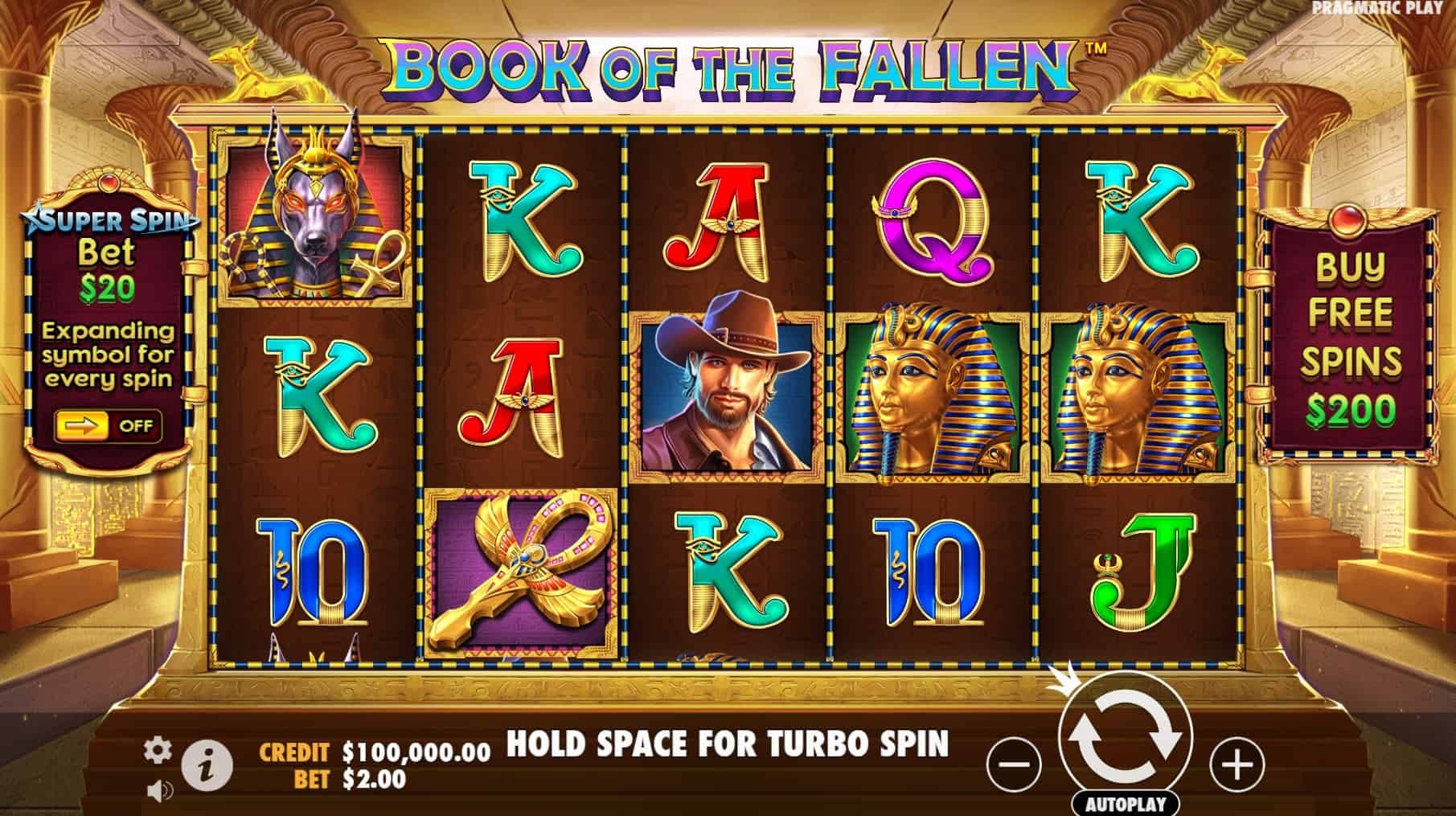





Book of the Fallen

Book Of The Fallen Game In Austria

How to play Book of the Fallen consciously: choose your stake, check features, set limits and stay 18+ in Austria.

Book of the Fallen demo
game image 1
Book of the Fallen

Book Of The Fallen Casino Game In Austria

Anyone wanting to start the game in Austria usually isn't looking for big promises, but for a clean process: open the game, understand the rules, set your stake, plan your session, done. This is precisely where "just trying it out" diverges from "getting stuck for two hours unnoticed." If you set up your start correctly, the whole thing remains entertainment - and doesn't become a project that still occupies you after playing.

Imagine you have a free evening and just want some variety. Many click through the lobby, choose spontaneously, hit start - and later wonder why they neither know what triggers features nor when they actually wanted to stop. The better way is simple: First get an overview, then play. A quick look at the game info, a clear budget, a timer - and only then the first spin.

Important for Austria: Play only if you are 18+, and only within the applicable rules. Reputable platforms don't just do this “somehow,” but offer tools like deposit limits, time limits, reality checks, and timeout functions. Use these actively, not just when you notice you're getting irritated.

Book of the Fallen

Gaming experience 2026: Fast, Mobile, Seductive

In 2026, the typical session is faster than before - not because slots have become “more magical,” but because we play them more often on our phones, casually, with fewer breaks. This changes perception: a few minutes feel like a short test, but quickly turn into many spins. That's why you need a pace that suits you, not your impulse.

Imagine you're playing on the tram or sofa, with something else running in the background. You click more mechanically, pay less attention, and suddenly the thought comes: “Just a little longer, maybe something will come soon.” This very thought is the warning light. Not because something “must come soon,” but because your mind is shifting from entertainment to expectation.

If you want a stable session, think in blocks: same stake level, clear time, then a break. You don't have to constantly analyze. You just have to prevent yourself from making decisions about money and time in the middle of stress. A calm routine beats any supposed “tactic.”

Book of the Fallen

Control Before Starting

The most important control isn't in the game itself, but beforehand. Set up your account properly, set limits, define your session plan - and only then start. This sounds bureaucratic, but it's the opposite: it saves you work later when you're tired, annoyed, or feeling euphoric.

Imagine you want to “just quickly” start and skip the setup. Later, when you actually want to stop, steps you hadn't planned suddenly appear. This friction often leads players to continue instead of calmly finishing. If you take care of the setup and limits beforehand, you can exit anytime without the flow holding you back.

Registration and Age Verification as a Basis

Complete profile and age verification steps as early as possible - ideally before planning a longer session. This prevents you from being stopped mid-game and then impatiently clicking further. A properly set up account is no guarantee of anything, but it is a guarantee of less stress.

Imagine you're having a good run, want to stop, and realize a step is still missing. Many then play “while they wait” or “while they sort it out.” That's exactly what you want to avoid. In such a moment, stop completely, complete the step, log out - and restart later if you truly want to.

Choose Stake and Set Pace

Stake is pace in disguise. A higher stake is not just “more per spin,” but also “less time to think,” because the budget fluctuates faster. Therefore, choose a level you can stably maintain, and only change it between blocks, not in reaction to frustration or hope.

Imagine you lose a few spins and immediately feel the reflex to go higher, “so it's worth it again.” This is rarely a good moment for decisions. Better: slow down, end the block, take a break. If you still want to play afterwards, start with the same stake level or even lower, so you remain calm.

H4 Timers, Reality Checks, and Breaks

Timers and reality checks seem trivial, but they are a must in 2026 because mobile sessions otherwise slip through your fingers like water. Set a fixed time beforehand (e.g., 20-30 minutes) and take the reminder seriously. The goal is not to annoy you, but to give you a decision outside the game situation.

Imagine the timer rings just when you're “in it.” If you just click it away now, you've missed the point. Stand up briefly, get some water, and decide anew. If you continue, do it as a new block - with a new timer and the same calm stake.

H4 Using Timeout and Self-Exclusion Correctly

Timeout is the immediate brake: you notice chasing behavior, irritability, or the urge to “win back” losses. Self-exclusion is the tool for recurring patterns: too often, too long, too much pressure. Neither is embarrassing, but mature, because you control the situation instead of running after it.

Imagine you've been telling yourself for weeks “tomorrow I'll play shorter” and it's not working. Then you don't need a new resolution, but a clear break. A longer stop can be exactly what you need to play in a controlled manner again later - or to realize that a break generally does you good.

game image 2
Book of the Fallen

Depositing and Withdrawing Without Stress

Cash flow often determines whether a session remains relaxed. Deposits you plan calmly feel normal. Deposits you make out of frustration often lead to annoyance. Withdrawals you treat as a conclusion help you stop cleanly - especially after intense moments.

Imagine you're slightly in profit and feel safe. That's exactly when many give it back because they increase pace and stake. A better routine is: stop briefly, check status, decide - and only then continue playing if you are truly still in “entertainment” mode.

Deposit as Routine, Not as Reaction

Set your budget before opening the game. A very practical rule is: one deposit per session. If the budget is used up, the session is over - regardless of whether you are annoyed or euphoric. This removes the negotiation from you at the very moment you are least able to negotiate.

Imagine you're losing faster than expected and want to “just add a little more.” Stop first. Exit the game, stand up briefly, and ask yourself: Am I still playing for fun or out of pressure? If pressure is involved, adding more is almost never the right answer.

Area

What You Set Up

Why It Helps You

Session Rule

One deposit per session

Stops impulsive reloads in moments of frustration

Time Frame

Fixed timer per block

Breaks autopilot and makes stopping easier

Stake Plan

Stable stake per block

Prevents jumps from hope or annoyance

Withdrawal Ritual

Briefly check, then end

Helps not to dilute a good session

Support Usage

Specific questions instead of emotion

Faster solutions without “waiting to play”

Withdrawal as a Concluding Ritual

Treat payouts as a point, not as a subordinate clause. This doesn't mean you always have to cash out, but that you consciously decide: “I’m done.” Many lose control at the end because they absolutely want to continue after a highlight or want to “turn things around” after a disappointing moment. Both extend the session without a plan.

Imagine you just had an exciting moment and feel adrenaline. That's when a ritual is golden: pause, decide, conclude. If you continue playing, do so only as a new block - with a new timer, stable bet level, and a clear stopping point. Without these three things, “just for a bit longer” almost always becomes longer.

Contact Support When You Stay Clear

Support is helpful when you ask specific questions: account, limits, payment status, technical issues. Emotional messages like “that’s unfair” rarely help you. Facts help you – and keep you from continuing to play out of frustration.

Imagine you see a status you don’t understand and become restless. Instead of covering up the restlessness with spins, you stop the session, ask specifically about the next step, and log out. This is the cleanest way to solve problems without them eating into your budget.

Book of the Fallen

Top casinos for playing Book of the Fallen - current list

ALF Casino

ALF Casino

Mafia Casino

Mafia Casino

SG Casino

SG Casino

Retro Bet

Retro Bet

leovegas

LeoVegas

Book of the Fallen

Understanding Game Mechanics: Clear, Not Mystical

You don't need myths to have fun. What you need is a practical understanding: how wins are counted, what triggers features, how volatility feels, and how your pace influences the whole thing. With this, you'll be better prepared for every session, whether you're playing on a PC or a mobile phone.

Imagine you just want to “take a quick look,” but after ten minutes, you realize you’re no longer consciously paying attention. This isn't a sign that you “have to keep at it,” but that you need to end the block. Understanding mechanics also means observing yourself.

Quick Info Check Before The First Spin

Take 60 seconds for the game info. Look for the logic behind payouts, symbols, and feature triggers. You don't have to read everything, just enough so you don't confuse “almost” with “exactly.” This will save you from typical impulsive decisions later.

Imagine you see many identical symbols on the screen and automatically expect a big payout. If the rules require specific positions, “lots on screen” isn't the same as “lots of wins.” A quick check prevents frustration – and frustration is the most common trigger for increasing bets.

Play Features And Bonus Moments Calmly

Features make the session more emotional because they feel like an event. The mistake is to make the event the goal. Many then say: “I’ll stop after the next feature.” This way, the stop keeps shifting further. Better: You stop after the block, regardless of whether a feature occurred or not.

Imagine you’re already over your time limit and think “just until something happens.” Stop anyway. If you really want to keep playing, do it later as a new session. This separation keeps you from undermining a good routine.

Understand Fluctuations Without Chasing

Fluctuations are normal. Some phases seem calm, others abrupt. The dangerous moment is when you start to interpret this as a signal: “Now it has to come.” This “has to” creates pressure, and pressure leads to bad decisions.

Imagine you’ve had a long dry spell and are becoming impatient. The best step is not “more,” but “less”: less pace, shorter block, clear break. If you still feel pressure after the break, it’s a sign that you should stop today.

Autoplay And Mobile Habits 2026

Autoplay is convenient, but it removes the micro-stops between spins. On a mobile phone, this is doubly relevant because you’re already more often distracted. If you use Autoplay, set short series and hard stops. If you catch yourself multitasking, play manually or don’t play at all.

Imagine you’re playing in bed, tired, and clicking mechanically. This is the perfect breeding ground for “just a bit longer.” Instead, set a short timer, keep the stake low, and end the block at the first sign of tiredness or irritability.

game image 3

Responsible Gaming In Austria 2026

Responsible gaming is not a moral label, but a system of small decisions. You set limits, you take breaks, you treat money flow as a routine, and you stop at clear signals. In Austria, this also means: 18+ only, only within the applicable rules, without sugarcoating anything.

Imagine you want to relieve stress and believe a session will help you. That might be true - but only if you don't bring the stress into the game. If you notice that you're playing to fix emotions, a break is the right tool. And if that happens more often, a longer break or professional help is the wiser step than “one more try.”

Mini Checklist For The Next Start

Before you start: set a timer, define a budget, choose a stable stake, one deposit per session, then play. After each block: pause, make a decision outside the game. If irritation, haste, or thoughts of chasing losses arise: timeout. If patterns recur: a longer stop. This way, the session stays great - and you remain in control.

FAQ

How do I set a sensible budget?

Before you start, set an amount that you accept as entertainment costs and divide it into two or three blocks. Imagine you're getting impatient after a dry spell – then you end the block and decide anew, instead of topping up in the game. This makes stopping easier and reduces impulse decisions.

What is a good stop signal during the session?

Irritation, haste, and the thought of having to 'recover' losses are the clearest stop signals. Imagine you're clicking faster and looking less – that's autopilot. At this moment, a timeout works better than more spins, because you regain distance.

How do I avoid constantly changing my stake?

Plan stake changes only between blocks, never in the middle of an emotional phase. Imagine you want to increase your stake after losses – instead, slow down and end the block sooner. Stable staking feels less exciting but is significantly more controllable.

When should I rather turn off autoplay?

If you are distracted, getting tired, or notice that you are mechanically continuing, Autoplay is a risk. Imagine you're playing on your phone on the side and lose track – then manual spins help because they create natural stops. Combine this with a short timer so the session doesn't run out.

How do I end a good session without giving everything back?

Treat the end as a ritual: stop, briefly check, decide, log out. Imagine you've just experienced a highlight and want 'momentum' – that's often when it turns. If you continue playing, make a new, short block with a timer and stable stake, otherwise 'just a little longer' is rarely short.

What do I do if a deposit or withdrawal gets stuck?

First, stop the session, then calmly resolve the issue. Imagine you're getting restless and want to fill the waiting time with spins – that's an expensive habit. Ask specific questions to support and log out until the next step is clear.

When is a longer break the right step?

If you repeatedly play longer than planned, make several money decisions per evening, or feel worse after sessions, a longer break is advisable. Imagine you often promise yourself 'tomorrow will be different' and it doesn't happen – then you need a real cut. Use self-exclusion and break functions, and get help if you find control difficult.

Play Now
🇬🇧 English